A movie and book review blog

Showing posts with label bollywood. Show all posts

Aug 17, 2026

Main Vapas Aaunga - Bollywood's own Titanic

Punjabis are possibly the most emotional people on the planet. They cry at weddings, fight at funerals, drape entire interiors in marble and make over-the-top movies about love and loss. Which makes it all the more puzzling that Bollywood, practically a Punjabi family business at this point, has given us so few films about Partition. Some movies about partition (of India and Pakistan) that I can think of are - Train to Pakistan, Tamas and Earth. All three of these I would consider Indian-indies, not typical Bollywood fare. Seventy-nine years, fourteen million displaced, a million dead, and we're still barely scratching the surface of the terrible geo-political event that led to the creation of a new nation called Pakistan.

Bollywood in 2020s, is a mere shadow of what it used to be, at least in my eyes. But finally it comes out with Mein Vapas Aunga - a true Partition story. Better late than never. The premise hits you like a train, the kind that crossed the border in 1947 carrying things nobody wanted to talk about for decades.


A 90-something man, deep in dementia, remembers exactly one thing from his entire life: his first love, lost to Partition almost eight decades ago. Very Titanic-ish. That memory of his first love is what is left in his whole hard drive. Everything else is gone. Just her, stuck on loop in a dying brain. India's Titanic, but with more tragedy, zero Leonardo DiCaprio and plenty of Naseeruddin Shah and a dollop of Diljit Dosanjh.
Naseeruddin Shah is extraordinary here. The man is confined to a bed for practically the entire film, and yet you cannot look away. Shah, as the bed-ridden patriarch at the death's door, gives an almost perfect portrayal of someone fading away into dementia. It is one of the best performances I've watched in recent history by a Bollywood actor. Whoever wrote his dialogues deserves their own award night.

I am not a fan of Imtiaz Ali's films in general, but you have to give it to the man, he is all about showcasing the vulnerable sigma male in his movies. This time that man happens to be a 90+ year old. Diljit Dosanjh is a perfect fit for the NRI grandson. The casting wrinkle is Vedang Raina playing the young protagonist. At 24-26 he reads a little too rigid, too unbothered, while Sharvari playing opposite him carries more emotional weight in every scene they are together. She seems older, he seems elsewhere. That pairing and the wooden-acting of Vedang Raina is a minor complaint in an otherwise well-mounted film. Watch it. Then some of you may end up calling your parents or grandparents.
Share:

Feb 1, 2026

Dhurandhar - The Long Game

There has not been a decent spy thriller made this well in Bollywood since forever. Dhurandhar, Aditya Dhar's ambitious action-espionage epic that dropped on Netflix last week, is what happens when a director decides to challenge the mediocrity that has plagued mainstream Bollywood cinema for years.

I, a detached viewer, on other side of the globe, tenuously tied to India by my Indian roots, didn't get the impression that it was your typical flag-waving, chest-thumping Bollywood fare. This is methodical, deliberate filmmaking that treats its audience like adults capable of sitting through a three-and-a-half-hour narrative without needing an item number or comic relief sidekick.

The film tells the story of Hamza, played by Ranveer Singh, a composite character based on real Indian intelligence operatives who spent lifetimes embedded in Pakistan's hostile territories. These are the invisible soldiers and spies who played the long game after devastating terrorist events on India like the Kandahar hijacking, the Indian Parliament attack and
26/11 Mumbai attacks. The movie follows India's intelligence apparatus methodically infiltrating and dismantling terror networks. If The Godfather had been a spy thriller, it might have looked something like this.
Ranveer Singh is excellent. This guy gives you a thousand dollars' worth of performance for every dollar you pay him. He's one of those rare actors in this era of fleeting stardom who consistently shows up and delivers, film after film. But the internet has lost its collective mind over Akshaye Khanna's Rehman Dacait, his style, his delivery, his entire presence has become the talk of social media. Sure, Khanna is magnetic, but this is still Ranveer's movie. I do agree there are some political undertones. R. Madhavan's character basically exists to deliver one-liners glorifying the current Indian administration. But here's the thing, I haven't been dialed into Indian politics for more than a quarter century, so I watched this like any other geopolitical thriller. The film portrays India positively but doesn't dehumanize Pakistanis. It shows Pakistan as a complex political landscape where gun-trafficking and terror training are unfortunate realities of their geopolitical business. What impressed me most is that Dhar made this as a mainstream commercial film, not as some niche arthouse project. He had the guts to demand more from audiences, to trust that they'd appreciate sophisticated storytelling over formulaic "for the masses" entertainment. The film's box-office returns, multiple-viewings of the movie by many cinephiles and the excitement and life it has brought back to Bollywood, tell us that Aditya Dhar's gamble has paid off. The climax action sequence alone, from the slow-burn tension building in a car to the relentless pursuit and brutal hand-to-hand combat is some of the finest action choreography Bollywood has produced.  
At 215 minutes, I wanted more when it ended. Part two arrives in March 2026. I'll be watching. 
Share:

Dec 17, 2025

Homebound (Netflix 2025) with Neeraj Ghaywan and Vishal Jethwa

Vishal Jethwa is my actor discovery of the year. I had no clue this guy existed until Netflix dropped Homebound into my weekend queue. What makes his story even more compelling is learning about his journey - a kid raised by a single mother, taking the scenic route that outsiders are forced to navigate in Bollywood, yet still managing to hold his own against the more pedigreed Ishan Khatter (Neelima Azeem's son and Bollywood actor Shahid Kapoor's brother).

Vishal Jethwa(l), Ishaan Khatter(r) - a scene from Homebound (2025)

The real kicker though is Homebound marks the triumphant return of Neeraj Ghaywan - my and probably India's rediscovery of the year. Ghaywan, the blogger-film critic ditched his corporate cubicle to chase his filmmaking dreams. His debut film - Masaan back in 2015 wasn't just groundbreaking because it launched Vicky Kaushal into Bollywood (tauba tauba..) it was revolutionary because Ghaywan tackled heavyweight themes like caste, class, and discrimination with the subtlety of a master craftsman and it made its all the way to Cannes and won a couple of awards.

Homebound took him back to Cannes again this year, above is the proof.

What sets Ghaywan apart is his authentic understanding of humiliation and institutional cruelty experienced by the downtrodden and lower caste/class people in India  – the kind that comes from lived experience, not research papers. Although Ghaywan grew up in urban in India of the 80s and 90s, going to prominent schools and almost never came out as 'Dalit' till he entered the film field later in his life. As a Dalit filmmaker, he brings a visceral understanding of what it means to navigate a world designed to keep you out. This is filmmaking from the trenches, created from blood, sweat, and tears rather than market research and focus groups. I have zero patience for fantasy fiction that exists in some make-believe bubble, but Homebound is cinema that matters.

Homebound continues the Ghaywan's unflinching style taking us along the life journey of two lifelong friends – young men from different discriminated backgrounds, one facing religious prejudice, the other caste discrimination. Jethwa and Khatter completely shed their Bollywood personas (though I'm not entirely sure Jethwa had one to shed in the first place) and deliver performances so grounded and vulnerable you forget you're watching actors.

The story unfolds before and during the pandemic, which hit me like a revelation about how differently COVID played out across the globe. All I experienced in my small-town America was minor 'conveniences' like working from home for a month and the great toilet paper shortage scare, India faced something entirely more devastating. The sudden shutdown didn't just pause life – it destroyed livelihoods overnight, forcing millions to walk thousands of miles back home when the entire transportation network collapsed. It was an unnecessary human catastrophe layered on top of an already devastating health crisis.

Throughout the film, B.R. Ambedkar's framed portrait appears like a gentle reminder - the Dalit statesman who studied at Columbia and LSE and architected India's Constitution. His presence in these frames speaks to unfinished promises and the persistent gap between constitutional ideals and street-level reality.

Homebound isn't just probably the best Hindi film of 2025 – it might just be the best, period. It's the kind of movie that reminds you why cinema exists in the first place: to show us ourselves, warts and all, and maybe help us figure out how to be a little more human in the process.

Share:

Nov 11, 2025

Baramulla : A movie by Aditya Jambhale (Netflix)

Baramulla, what could a film about Baramulla possibly be about? Other than being another film about the decades-long disputed-territory status of Kashmir. But I was happily surprised, and in the best possible way.

Before diving into the movie, here's some backdrop: Baramulla is this town up in Jammu and Kashmir, India's northernmost state that's still a bit of a hot mess. Kashmir has been like an open wound ever since India's independence, when the Hindu king of this Muslim-majority region decided to throw his lot in with India. Both Pakistan and India have been picking at this wound ever since, and one of the most brutal chapters was the displacement of Kashmiri Pandits - that's the majority Hindu group in Kashmir, back in the late eighties and nineties. Not exactly feel-good material for your average weekend movie night. Baramulla, the movie, comes from director Aditya Suhas Jambhale and stars Manav Kaul and Basha Sumbli as a Muslim couple. The husband's a cop, deputy superintendent of police, freshly posted to Baramulla to investigate some politician's kidnapped kid. The director and both lead actors are all from the displaced Kashmiri Pandit diaspora which adds a layer of authenticity. The family moves into this gorgeous, rambling old house that screams traditional Kashmir architecture. And man, does this house work overtime in the atmosphere department. It's pretty in that old-fashioned way that makes you want to book a vacation there, right up until the creepy stuff starts happening.

Now, I'm not sure if this counts as a Bollywood film. Sure, it's in Hindi and features Manav Kaul, who's done his share of Bollywood gigs, but it feels like something else entirely. We're seeing this whole new parallel cinema thing happening - movies produced by Netflix, Amazon Prime, and their streaming cousins, using local crews and native languages but breaking free from the tired old Bollywood formulas which have not been hitting the mark lately. I'll admit, I was dragging my feet about watching this one. The producer, Aditya Dhar, made his directorial debut with Uri: The Surgical Strike, which wasn't exactly my cup of tea, so much so that I never even watched it. But then I caught wind of some chatter about Baramulla being supernatural horror, not just political drama. And you know what? Sometimes the best surprises come when you're least expecting them. What we get here is a quality film that somehow manages to mash up history, politics, horror, drama, and actual ghosts without turning into an emotional train wreck or an over-the-top melodrama. For an Indian film to pull that off without the usual histrionics is genuinely refreshing. Shot entirely in Kashmir, with top-notch acting, editing, production design, and direction across the board. Jambhale has crafted one of the most creative supernatural films to come out of India in recent memory, and here's why it works: it's anchored firmly in reality, history, and the real suffering of real people. The genius move here is making us experience the horror through the eyes of a Muslim family - the same religion as those who perpetrated the Kashmiri Pandit exodus - and forcing us to realize that regardless of religion, we all feel the same outrage when faced with atrocity, no matter who's dishing it out.

The sequences where history bleeds into present-day attacks where the veil thins between the dead and the living are masterfully interwoven, creating a storytelling and editing exercise that's both haunting and enlightening. A well-made film that doesn't preach but provokes thought. Perfect for lovers of history and supernatural storytelling who aren't afraid of confronting uncomfortable truths.


Share:

Nov 8, 2025

Parichay (1972): A movie by Gulzar

All the stories that we could ever tell have already been told. Or we are at a point in human history with our hyper-connectivity that the stories that might have been viewed as fresh in the past are weak sauce now. All our sources have been exhausted or told and retold to death, and my attention span for long-form movies, like the rest of urban humanity, is fleeting-every-thirty-seconds if I'm being generous. When I'm watching these older films, there's usually nothing that rivets me to the couch, not that such a contraption is necessary. I'm usually glued there without any artificial means to achieve that state.

Gulzar's 1972 film Parichay is essentially The Sound of Music transplanted to an Indian setting, complete with a male live-in tutor tackling a bunch of unruly kids who happen to be the grandchildren of a wealthy zamindar. The secret to creativity is knowing how to hide your sources, and back in 1972, The Sound of Music had probably only been seen by a handful of Indian elites who could travel abroad or lived in Bombay.

Jeetendra steps into the Julie Andrews role here, minus the singing on mountaintops but with plenty of his own charm - many times featuring his signature white on white outfit, white shirts and white pants. What makes Parichay stand out from your typical Bollywood fare of the early seventies is Jeetendra's character and his unusual narrative device. Our hero has what he calls his "second track", a mental monologue that surfaces as intermittent voice-overs throughout the film. This internal commentary feels surprisingly fresh and modern for a movie that's over fifty years old. The film follows the familiar template: stern patriarch, rebellious grandchildren who've turned the household upside down, and the arrival of a tutor who's supposed to whip them into shape. But Gulzar, being Gulzar, adds layers of nuance that elevate it beyond a simple adaptation. The kids aren't just mischievous for the sake of plot convenience; their rebellion stems from genuine grief and abandonment issues following their parents' deaths. Jaya Bhaduri plays Jeetendra's love interest, though calling her one of the "unruly kids" feels like a stretch considering she's clearly a legal adult who's completed her high school education. The romance subplot unfolds predictably but with enough genuine emotion to keep you invested. The supporting cast reads like a who's who of veteran Hindi cinema - Pran as the stern zamindar, Asrani as the loyal family servant, A.K. Hangal as Jeetendra's uncle, and Leela Mishra as his aunt. Sanjeev Kumar and Vinod Khanna make guest appearances, which speaks to the film's pedigree.  

Parichay might be a retelling of a familiar story, but sometimes the comfort of the familiar is exactly what you need. Gulzar takes the bones of The Sound of Music and gives it an Indian soul, complete with the emotional complexity that comes with joint family dynamics. For a film that could have easily been a lazy adaptation, it manages to find its own voice through that clever narrative device and solid performances from its ensemble cast. 

Share:

Jan 26, 2025

Stree 2: Sarfire ka Aatang - A Ghost of a Good Time in Stree-verse

Sequels make me suspicious. They’re full of potential but equally capable of ruining all the good feelings from the first one. Thankfully, Stree 2: Sarfira ka Aatang didn’t leave me ghosted (pun intended). Directed by Amar Kaushik, who had directed Stree, it picks up where the first film left off, gives us more of what worked, and somehow doesn’t trip over itself trying to outdo the original.

Rajkummar Rao, our everyman hero with just the right amount of his fast-talking neurotic energy is back, navigating the chaos with a mix of vulnerability and street-smart bravado. Shraddha Kapoor keeps the intrigue alive, walking that tightrope between enigmatic and relatable without missing a beat. But it is the supporting cast that steals the show. Aparshakti Khurana and Abhishek Banerjee bring their A-game, nailing the kind of chemistry that makes even their silliest antics feel genuine. And then there’s Pankaj Tripathi, whose deadpan delivery could make a grocery list sound profound. Together, they form the comedic backbone of the film, which is more comedy than horror.

The script is a win. It’s snarky and clever without trying too hard, which is rare these days. There are enough jokes and funny elephant scenes to keep you entertained and just enough twists to keep you engaged. I won’t pretend it’s groundbreaking storytelling, but it doesn’t feel lazy either. And yes, they’re expanding the Stree universe, bringing in hints of Bhediya and other movies. I’m cautiously optimistic about that, universe-building is a slippery slope, so far there are no mis-steps.


The music surprised me. 
Bollywood soundtracks have been stuck in a forgettable loop for a while, but Stree 2 breaks the curse. Every track is a banger. I have been listening to the Stree 2 playlist while typing this. 

But here’s the kicker, beneath the slapstick and spectral antics, Stree 2 has layers. On the surface, it’s a horror-comedy romp. Scratch a little deeper, and you find a sly commentary on patriarchy, freedom, and the headless monstrosities we’ve built to keep women in their “place.” It’s Barbie meets Tennessee Williams meets that one anthropology class you took because you thought it’d be easy. The titular “aatang” is more than just a ghost; it’s a metaphor for every institution that tells women what they can and cannot be. But don’t worry, you can still laugh your head off even if you miss all that.

I did notice some Stranger Things' influence. From the eerie “upside-down” world visuals to the atmospheric, neon-lit poster that looks like a discarded draft of the Stranger Things poster. It adds a pop-culture nod and playfulness to the film and I plan not to read much more into that.

So, should you watch it, if you have not already? Absolutely. Go in with your brain on low power mode, laugh at the absurdity, and let yourself get swept up in the chaos. And if you feel like diving into the metaphors later, that’s a bonus. Stree 2 isn’t trying to change the world, but it’s definitely here to make sure you’re having fun while the world keeps spinning. I ended up watching Bhediya (it is on Tubi, Stree 2 is on Prime) too not to be left out from this budding universe building happening in Bollywood.  Grab your popcorn, suspend your disbelief, and join the madness. The Stree-verse is just getting started.

Share:

Oct 11, 2024

Dev Anand & Guide (1965) - Hindi & English

Guide is a movie far ahead of its time - an ultra liberal redemptive take on a taboo subject. A dose of (reluctant) spiritualism and its hit songs may have sold the movie to the masses and made the Hindi version a phenomenal success at Bollywood box office. 

Dev Anand, Waheeda Rehman and a group of actors playing the role a film crew in Guide

What I appreciate are all the bold attempts it makes to address the conservative norms of sixties India, all packed smoothly and skillfully into a song-dance-melodrama bundle of a Bollywood movie.

I might be the minority here but I liked the English version of Guide better than the Hindi version of the legendary Bollywood movie. The English version of the Guide was written by the renowned author Pearl S. Buck and directed by Tad Danielewski. 

Both are two different movies, shot by two different directors, with almost the same set of actors, at the same locations, months apart. Guide might be the only Indian movie who had two birth fathers, a semi-identical twin movie!

Guide follows on the footsteps of Raju, a tourist guide in Udaipur, Rajasthan, India, played by the evergreen actor Dev Anand. We get to ride with Raju on his life's journey where he meets and falls in love with Rosie, a young girl, married to an aging archeologist who has no patience for her youthful spirit. The beautiful Waheeda Rehman essays the role of ebullient newly wed Rosie with stars in her eyes and her husband Marco is played by the multi-talented Kishore Sahu.

Dev Anand, Kishore Sahu & Waheeda Rehman in Guide (Hindi, 1965)

Guide is based on the famous Indian writer, R. K. Narayan's novel, The Guide. The Hindi version of the Guide was directed by Dev Anand's younger brother and successful director, Vijay Anand (Goldie.) The female characters in stories Dev Anand and his production house - Navketan Films had chosen to make movies of, including Rosie, are strong, lively, independent and modern in their outlook. 

Dev Anand during his best period of movie-making and acting between 1950 - 1980 was always on a quest to introduce new topics and broaden the views of typical Indian movie audience through his creations. He and the female leads often played morally ambiguous characters in his movies. Had they been in any other Hindi movie of the time they would have been harshly judged. No such negative scrutiny befell his movies. Adultery, long distance lovers falling out of love, black marketing, marijuana use by hippies were all explained with maturity and the right kind of conviction to get the buy-in from Indian audience who lapped up his movies and their chart-topping songs.

Dev Anand sitting on the ledge with Waheeda Rehman and Guru Dutt flanking him (Courtesy: Indian Express Archives)

Guide has the leading man (Raju played by Anand) and the leading lady engaging in an adulterous relationship. But they are also independent individuals on their own journeys who do not depend a lot on each other. This was a concept indigestible by Indian public of the sixties. But not only did Guide become a super hit movie, it is also one of a handful of movies that has secured a permanent place in a variety of top 10 list of Indian films from any era. 

Here is to Dev Anand - Indian film's liberal visionary and an evergreen style icon, who never lost his zest for life or creativity. His death came in the form of a cardiac arrest at the age of 88, two months after the release of his last film, Chargesheet in 2011, which he had both directed and produced! 
Dev Anand with his wife, actor Kalpana Kartik (Mona Singha) whom he married over a lunch break during a movie shoot


Share:

Oct 3, 2024

Mother India (1957)

Mother India, the film, was the end result of a successful campaign by director Mehboob Khan to reclaim the title "Mother India" from the clutches of American author Katherine Mayo's critical work on Indian culture and society titled 'Mother India', released in 1927. Mayo's book was a scathing critique of India and its people and values and was intended to justify why Indians were not capable of self-rule at a time when all of India was firing and gearing up for freedom from British rule, which would happen 20 years later. Mahatma Gandhi called Mayo's a book, "report of a drain inspector sent out with the one purpose of opening and examining the drains of the country to be reported upon"

Soon after the independence of India in 1947, Mehboob Khan who had been intent on establishing right  Indian values on the big screen started work on remaking his own 1940 film, Aurat, by buying the production rights from the original production company. He intentionally called his film Mother India as a challenge to Mayo's work, in an attempt to eradicate the presence of Mayo's work from minds and history. An ethical or reverse astroturfing attempt that was a great success. If you google Mother India first several pages of search results are all related to Mother India, the movie or Yelp reviews of Mother India restaurants in various parts of the globe which are all Indian restaurants named paying homage to the iconic movie. Khan's Mother India was also influenced by movies based on Pearl S Buck novels - The Mother (1934) and The Good Earth (1931) and Russian films like Mother (1926) and Our Daily Bread (1934.)

The nationalistic pride of the new democratic nation is upheld high by the socialist and constructivist stylization of the movie. The iconic poster of Mother India with bold upward angles where the lead actor Nargis is seen holding up  the plough all by herself shows the determination of the rising new nation, the motherland, as Indians call their country (home country is feminine in all Indian languages) represented by the struggling but determined mother in the movie. The image is also reminiscent of Jesus on the cross, who if you ask me, was the first recorded socialist in (religious) history. The Soviet post-revolutionary posters dunked in constructivist ethos showcasing the rise of the proletariat came much later, but I am pretty sure all of these influences helped design the classic poster of Mother India.

This Mehboob Khan magnum opus usually features in top 10 list of Indian movies. It was India's first ever submission for the Academy Awards for the best foreign language film in 1958 and was chosen as one of the five nominations for that category. It also came close to winning the best foreign film Oscar losing out to Federico Fellini's Nights of Cabiria by a single vote.


The script by Wajahat Mirza & S. Ali Raza was deliberately written to show the emancipation, self reliance, empowerment and strength of Indian women.  The lead characters were portrayed by Nargiz, Raaj Kumar, Sunil Dutt and Rajendra Kumar with exemplary brilliance and the film became a turning point in their careers. Nargiz who was an established actor at the time fell in love with Sunil Dutt who played her son in the movie (they were the same age in real life) and went on marry to Dutt a year later. She won several national and international awards for her role in Mother India which was her last major film before she quit films post-marriage. For all the other three actors, Mother India kickstarted their careers and made them household names for years to come. 

The ending of Mother India culminates with the moral dilemma of the mother who is called to make the ultimate sacrifice that could be asked of any mother. To me, this ending is strangely reminiscent of the ending of another film four decades later featuring Nargiz and Sunil Dutt's actor son Sanjay Dutt - Vastav, where the mother commits to making the same ultimate sacrifice, a la Mother India v 2.0.


Share:

Apr 20, 2024

Pakeezah (1972), Meena Kumari and Trains

Meena Kumari's character Sahibjaan in Pakeezah has an obsession with trains, just like me. Although the root cause of our obsessions are vastly different. She almost met (she was sleeping, so she didn't get a chance to meet in the conventional sense) a handsome stranger on an overnight train journey, who left a note of appreciation about her soft feet in Urdu. Even expletives sound like poems in Urdu, so can't blame the lady if she fell head over heels reading a poetic note about her heels. 

Ethereal Meena Kumari, staring out of the window of the train, right after she has read the mysterious note
My fascination with trains could've started in my childhood filled with multi-day, overnight train journeys that took our family to places known & cherished or unknown & magical. If you lived in India in the 20th century and loved/had to travel, there was no escaping the trains. That was probably why  connecting the story-dots in director Kamal Amrohi's story is the omnipresent Indian Railways.

Pakeezah, Meena Kumari's magnum opus created for her by her husband (later ex) Kamal Amrohi is a grand visual poem which took almost fifteen years in the making. The majority of the work happening during the years 1964 to 1971 and the movie was released a couple of months before Meena Kumari's death at 38 in March 1972.

Meena Kumari designed all her wonderfully pirouette-able and elegantly colorful dance costumes for the movie. The music and the songs which can single-handedly make or break a Bollywood musical was composed by Ghulam Muhammad and the lyrics were penned by some of the best Urdu poets of the era like Kaifi Azmi, Majrooh Sultanpuri, Kamal Amrohi and Kaifi Bhopali. The cinematography and the production design must have cost a pretty penny.

It is a Muslim-social about a tawaif (a Muslim courtesan or dancing girl) who falls in love with a gentleman in a history-repeats type of situation where the same kind of doomed love affair happens to a mother and her daughter, with two different gentlemen, of course. Both the mother and the daughter are played by Meena Kumari, but there in no need for these characters to share screen time as mother dies after childbirth and the daughter is only shown after she is in her late teens as she takes on the role of the dancer-courtesan. Ashok Kumar plays the love interest in the first affair and Raj Kumar's impeccable Hindustani diction won him the role of the younger Meena Kumari's lover.

The tumultuous life of Meena Kumari, the actor, is evident on her face that ages a decade during the making and completion of the movie. Meena Kumari, while she does not look like she is 17, is convincingly young as the younger (daughter) courtesan when the film starts out. But the film which seems to have been shot chronologically shows a beaten, puffy actor ravaged by depression and ill-health, as it progresses past the half way mark.

The lovers - Raj Kumar and Meena Kumari, accidentally meet again, during a train journey towards the end of the movie

Pakeezah is a window into a bygone era and world where tawaifs and nawabs used to exist along with teak-paneled Indian railway coaches and horse-drawn tangas. Much of the actions of the characters cannot be explained or justified in the current context nor is the century old societal framework comprehensible while I am typing and gazing at the neighbor's Tesla parked on their driveway. It is a splendid period piece, elegantly crafted, a fitting final tribute to one of the greatest actors of Indian cinema - Meena Kumari, and totally woman-'owned'. 


Share:

Mar 30, 2022

83 : A movie review, reliving Prudential Cup almost 40 years later

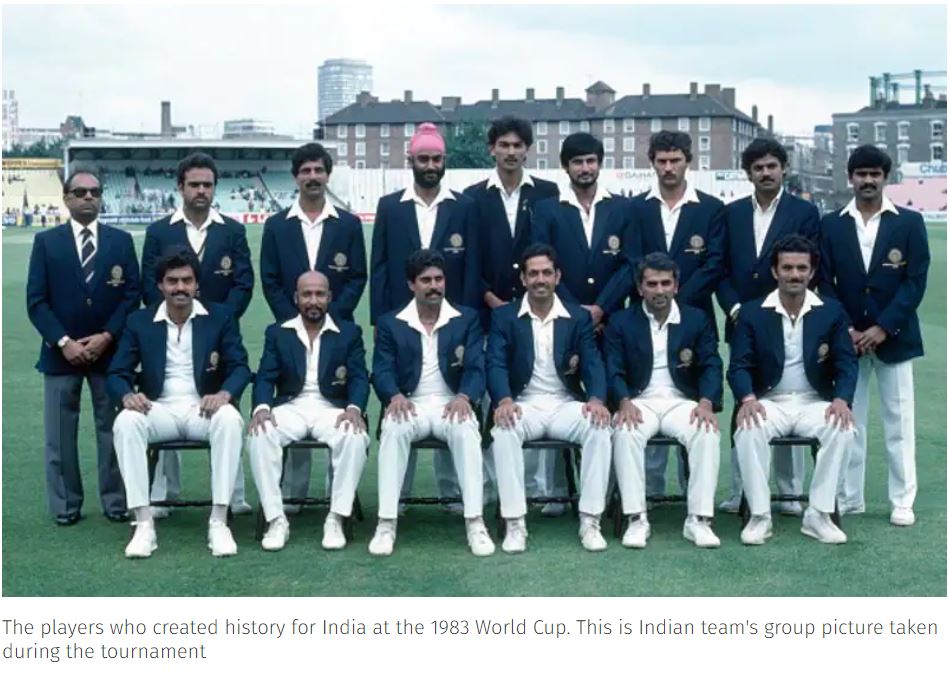
1983 Prudential Cup is my cup of frisson on demand. I just have to glance at the pictures of a grinning Kapil Dev holding the '83 world cricket cup or people overrunning the stadium at Lords to get auto-response goosebumps. As a grade schooler, I had my own scrapbook filled with newspaper cuttings of India's first ever win of a world cup of any sort.


Whether India likes it or not, English and Cricket are the two lasting colonial legacies the British left the Indians with, in return for Kohinoor and centuries of continuous looting of India's resources and treasures. Both English (the language) and cricket have stood India in good stead, have been important catalysts helping to grow the Indian economy and establishing India on the global scene. The British East India company is the reason why this blog is in English. My love for cricket is the reason for this post.

Living  deep in no-Indian (East Indian, not native American) country, I was waiting for a streaming service to release 83, Kabir Khan's retelling of India's 1983 Prudential Cup journey. Finally it aired on Netflix last week. The best part about 83 is the effort the director and his team have put in getting the details right. The players, their playing styles and mannerisms, the events and situations they find themselves in have all been depicted as close to reality as possible. I know, because they are in my newspaper clippings scrapbook :-)

Another redeeming point for the director is he succeeded in capturing the swagger and the intimidating presence that was the West Indies team of the late 70s and 80s. 


Considering the kind of attention to detail given to the style and stance of the individual Indian players and the cool West Indians, I have tried to overlook the cringe inducing jingoistic or sentimental elements that a Bollywood movie cannot do without, which 83 couldn't get rid off completely either. A fictional 
ceasefire at the farthest outpost in the Himalayas on the day of the finals! I am just glad that we narrowly escaped suffering a patriotic song sung by soldiers in sub-zero temperatures. It didn't do well at the box office despite critics (and I) loving it. Maybe the current audience, mainly millennials and younger, could not relate to it? 

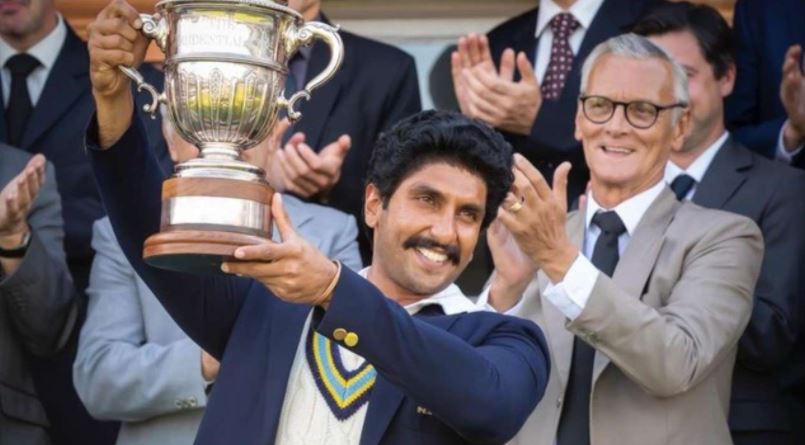
The actors, including Pankaj Tripathi as the team's manager have given great performances. Kapil's Devils as the Indian team was called back then, are represented in the movie by Saqib Saleem playing Mohinder Amarnath , Tahir Raj Bhasin as Sunil Gavaskar, Jatin Sarna as Yashpal Sharma,  K. Srikant  played by Jiiva, Sandip Patil played by his own son Chirag Patil, Nishant Dahiya as Roger Binny and others. The greatest discovery for me though, is Ranveer Singh, who essays the role of the captain Kapil Dev Nikhanj.

Ranveer Singh, with his penchant for outrageous outfits, has the persona befitting an offspring of a peacock and an eccentric fashion designer if such a coupling could have happened.  I had never really given him much thought as an actor. In fact when they announced casting Ranveer Singh as Kapil Dev, instead of say someone like Randeep Hooda who is from the same area in India as Kapil Dev and is a sportsman in addition to being an actor, as a fan of Kapil Dev I was disappointed. 
Ranveer Singh as Kapil Dev

Then I saw Ranveer Singh in 83 as Kapil Dev.  The entire production team and the actor himself have gone into so much detail getting into the skin of real Kapil Dev, that the audience is unable to see Ranveer Singh anymore. That's when I realized that Ranveer Singh has been proving me wrong with his every recent outing - whether it is Gully Boy or Padmavat or 83, the guy can act. At this point I would rate him as one of the best amongst the current bunch of younger Bollywood actors. 

83 is not Chak De India, which is probably the best Bollywood sports movie in my book. But it is history. Kabir Khan's 83, while it could have been better, has done a decent job depicting a momentous turning point in India's cultural history.


Share:

Nov 2, 2021

Silsila : A review

Living in eighties and nineties India it was hard to avoid watching Silsila. The movie and its songs were always on some channel or the other. I absolutely could not stand watching Amitabh Bachchan and never found out what his appeal was. Still don't. I waited 40 years before taking the plunge to watch Silsila and decided to watch it on whim the other day when I saw it on Amazon Prime. 

Amitabh Bachchan, Jaya Bhaduri Bachchan and Shashi Kapoor in Silsila (1981)

Yash Chopra's 1981 romantic classic ventured into the taboo area of extra marital affair and had Amitabh Bachchan, the reigning super star of Bollywood at the helm. Watching the movie now, I am amazed how some of Amitabh's mannerisms are reflected in Shah Rukh Khan. Although I have heard this mentioned before this is the first time I have noticed the similarity. 

Rekha and Sanjeev Kumar in Silsila
The movie fared below average when it was released in 1981, probably because it almost succeeded in having the audience empathize with the cheating husband and the other woman. Not exactly the kind of film the audience want to concede that they related to, considering how sacrosanct the institution of marriage was in India in the late 20th century. It is regarded as a classic now.

The screenplay is smooth, the actors have given great performances. It is a treat to watch Sanjeev Kumar and Shashi Kapoor, the other big name stars in addition to the love triangle trio of Amitabh Bachchan, Jaya Bhaduri Bachchan and Rekha. It was quite a casting coup that YRF achieved by casting the real life couple Amitabh Bachchan and Jaya Bachchan together alongside Amitabh's alleged mistress Rekha in exactly the same roles as IRL 

Here are some gossip column snapshots about the film, from way back machine.


Share:

Oct 30, 2021

Sardar Udham

To narrate the biography of a freedom fighter without sounding jingoistic is not an easy undertaking. Shoojit Sircar's Sardar Udham is an understated piece of film making we don't see much in Bollywood in these days of Bell Bottoms, Kesaris and Bhujs.
Vicky Kaushal as Sardar Udham

The casting is spectacular.  Vicky Kaushal is becoming the thinking person's hero,  who straddles the line of commercial Bollywood and alternate cinema with the ease of a seasoned tight rope walker. From essaying a teen to a forty year old, the effortlessness which with Vicky gets into the skin of the character in Sardar Udham is admirable. Did I say I like Vicky Kaushal? He is so quintessentially Indian - could be from North , South,  East or West of India.
The production design leaves no room for finding historical mis-steps. The British characters are not monsters, the subjugated Indian patriots are not embodiment of morality and virtue, all are faulty humans, victims of their circumstances.The cinematography is amazing, it has one of the best depictions of Jalianwalla Bagh massacre ever shown on screen. Even in the imagery representing brutal slaughter of hundreds of people, India is painted with a breathtakingly poignant brush with striking colors.
The movie is a bit of a slow burn, especially for someone like me whose fingers are glued to the forward button on the remote. But I understand,  Sardar Udham is like an episode of Oliver Stone's Untold History of United States India, you think know the story,  but you don't, so you will yourself to watch a skillfully crafted old school film making, word by word, moment by moment as history unfolds. 

Ram Muhammad Singh Azad or the real Udham Singh in British custody
An ordinary Indian guy plans and prepares (flying solo for the most part) for his revenge, on a representative of the British Empire. It takes him 20 years to complete his mission of eliminating his target, his revenge for killing 1500 civilians in his hometown of Amritsar. The British never formally apologized for the massacre, but expressed 'regret' on the 100th anniversary of the event in 2019.


Share:

May 28, 2021

Sandeep aur Pinky Faraar : A review

After the long drought brought about by Covid19 in 2020, which seemed to have affected Hindi / Bollywood movie industry more than the regional Indian movie industries, I finally saw a watch-able Hindi movie - Dibakar Banerjee's Sandeep aur Pinky Faraar (SaPF).

The opening scenes of SaPF are uniquely NCR-ish with a camera mounted on the hood of a fast-moving car, trained on a bunch of rowdy passengers as they zip past the almost deserted Delhi highways in the dead of the night. The viewer is placed directly into the fight or flight situation of the lead characters right after this high-octane ride meets an abrupt end in the first few minutes of the movie.  And the protagonists - Parineeti Chopra (Sandeep) and Arjun Kapoor (Pinky), decide to make a break for it. Why, What and Where to will be revealed as the movie progresses.

Sandeep aur Pinky Faraar reminds me of a few other movies. I could catch glimpses of Ishaqzaade in SaPF. Ishaqzaade  was Arjun Kapoor's debut movie where he was paired with Parineeti. That too was an us-against-the-world story of escape. I recently watched an exceptional 2021 Malayalam film - Nayattu (meaning the Hunt) which is about a group of three people escaping the system that is trying to hunt them down. SaPF is very similar in its theme with Nayattu. Instead of three almost-strangers, in SaPF we have two hitherto unacquainted persons thrown into a dire do or die situation and fleeing across geographies just as in Nayattu.

The burly Arjun Kapoor (Pinky) is a suitable fit for a cow-belt roughneck who is a suspended Haryanvi cop and a hitman for hire. Parineeti has held her usual bubbly persona in check and comes across competently as an educated and sophisticated woman (Sandy Walia) at the top of the corporate ladder. 
 
By giving a girlish name - Pinky, for the brutish cop and a masculine name for the female character, the title of the movie offers an insight into gender bender roles the director has envisioned for his protagonists. The film and the script also feature several artful instances where these two unconventional leads scrape against the pillars of the patriarchal landscape they flee across.

Although there is predictability at many places, it is while watching movies like SaPF (versus something like Parineeti's previous disastrous outing - "The Girl of on the Train") you realize how much of the actor's output and performance is molded by the director. Dibakar Banerjee is not only able to extract outstanding performances from the lead pair, but the actors who played side characters like Raghuvir Yadav, Neena Gupta, Jaideep Ahlawat, Rahul Kumar are also remarkable in their modest but fully fleshed out roles.
Share: